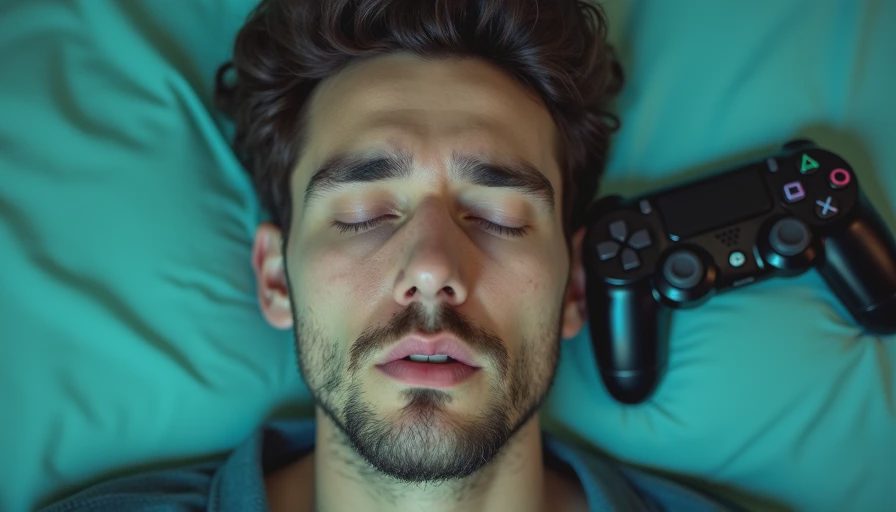
A gaming hangover arrives when the credits roll and everything else suddenly feels badly written. The dishes still need doing, work still starts at nine, and the backlog remains impressively large, but no other game seems capable of occupying the space the finished one left behind. This is not simply boredom. It is the aftereffect of sustained attention, emotional investment, and a rhythm that has become part of your daily life.
For adult players, the feeling can be especially sharp. You might have spent thirty hours with a game over several weeks, learning its systems, recognizing its music, and allowing its world to become familiar. When that routine ends, opening another title can feel less like a fresh beginning than an interruption. A gaming hangover is the mind resisting a new set of rules before it has finished processing the old ones.
Why a gaming hangover feels so convincing
The best games do not merely provide content. They establish a private tempo. You know how long it takes to cross a particular district, when a certain character tends to call, and which menu contains the upgrade you need. Repetition stops feeling repetitive because it has acquired meaning. The game becomes a place with weather, history, and dependable doors.
That familiarity is why a short game can leave a deeper gaming hangover than a sprawling one. A compact adventure with a precise ending may give you less to do but more to remember. A seventy-hour open-world game can occupy your evenings without ever becoming part of your inner life. Length is not the same as intimacy, and completion is not the same as impact.
There is also a practical loss of momentum. During a long playthrough, decisions remain connected: one mission leads to another, one mechanical discovery changes how you approach the next encounter, and a character's earlier choices color a later scene. Once the final chapter is over, that chain breaks. Starting something new demands attention before it offers any reward, which is a difficult bargain when your free time is already divided among work, relationships, errands, and sleep.
The difference between fatigue and emptiness
Not every gaming hangover means the game was a masterpiece. Sometimes it is ordinary exhaustion. If you have played the same combat loop for six hours in a weekend, even a good title can start to feel like a second job. The answer there is simple: stop, walk outside, cook something, or spend an evening with a movie. Your attention is tired, not necessarily changed.
Emptiness is different. It appears when you sample several games and reject them for reasons that seem unfair. The tutorial is too slow. The characters are too loud. The map is too busy. The combat feels fine but meaningless. These judgments may be accurate, but they can also be comparisons against a recently completed game that earned unusual access to your attention.
I notice this most after games with strong atmosphere. A restrained horror game, a carefully paced role-playing game, or a quiet narrative adventure can make the next title feel vulgar simply because it announces itself more aggressively. The problem is not that the new game is bad. It has arrived while the old one is still echoing.
This is where criticism should resist easy diagnosis. Calling every post-completion slump a gaming hangover can turn a useful reaction into a cliché. Ask what you miss. Is it the characters, the setting, the combat, the music, or the act of having a clear purpose each night? The answer tells you whether to seek a similar experience or deliberately choose its opposite.
How to recover without forcing the next game
The first useful move is to create distance. Do not immediately launch the largest, most prestigious game in your library. A demanding new world asks you to learn its vocabulary while you are still translating the previous one. Give yourself two or three evenings without a major campaign. Read something, play a board game, watch a film with a clear ending, or return to a familiar multiplayer game where no emotional commitment is required.
When you do return, change scale. After finishing a ninety-hour role-playing game, try a two-hour puzzle game. After an intense story, choose a systems-driven title with minimal dialogue. A different rhythm gives your attention somewhere to settle. This is not a prescription for lighter entertainment; it is a way to stop treating every game as an audition for the one you just completed.
A gaming hangover also becomes easier to understand when you write down a few sentences about the finished game. What did it want? What did it refuse? What did it waste? What remains? Those questions separate genuine attachment from completion momentum. They also preserve the experience before memory turns it into a blur of favorite scenes and approximate hours.
If you want a direct bridge, choose a game that shares one quality rather than every quality. Follow a strong soundtrack with another game known for musical texture. Follow a character study with something built around relationships. Do not chase an exact replacement. The next game should answer the previous one, not impersonate it.
When the backlog makes things worse
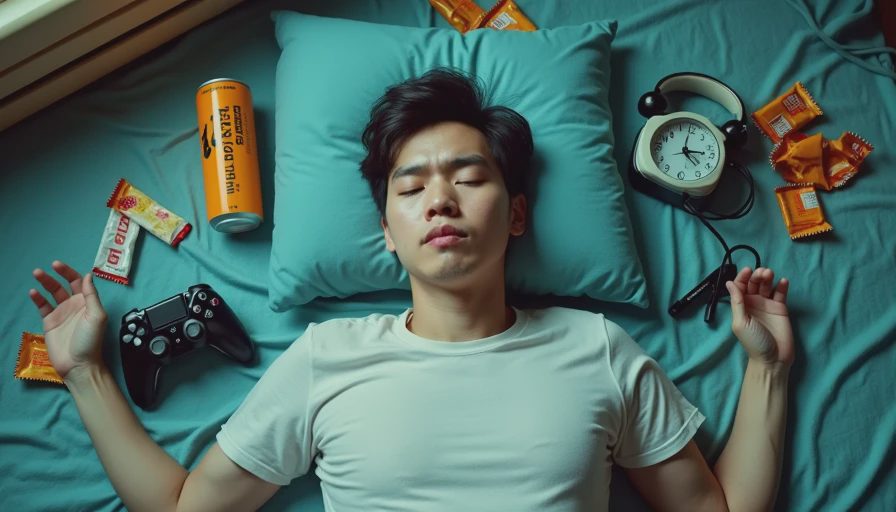
A large backlog creates a strange kind of pressure. Every unfinished title appears to be waiting for its turn, and finishing one game can make the others feel like obligations rather than possibilities. During a gaming hangover, that pressure becomes louder. You scroll through a digital library, see dozens of acclaimed releases, and feel less interested with each passing minute.
The solution is to remove the imaginary queue. You do not owe a game completion because you bought it on sale, downloaded it through a subscription, or once admired its trailer. Pick from three realistic options: something short, something familiar, or something you have wanted for a specific reason. If none of those choices creates curiosity, do not play. The evening is not wasted because it did not produce progress on a checklist.
This matters because time changes the meaning of value. A $60 game that gives you one absorbing weekend can be a better use of money than a $15 game that sits untouched for a year. The same is true of a long game you abandon after twelve hours. Its advertised length is not a moral standard. The useful question is whether the experience is still giving something back.
What a gaming hangover tells you about taste
A gaming hangover can reveal more than your next purchase. It can show you which forms hold your attention and which kinds of friction you are willing to tolerate. Perhaps you miss a game that trusted you to get lost. Perhaps you miss a story that left silence around its major moments. Perhaps you valued the feeling of mastery more than the plot and have been choosing games for the wrong reason.
That information is worth keeping. Make a small note beside finished games: what you remember, where the pacing sagged, and whether the ending changed your view of the whole. Over time, patterns emerge. You may discover that you prefer twelve focused hours to fifty padded ones, or that you enjoy difficult systems only when the game gives them a strong visual and musical identity.
The most important thing is not to cure the feeling immediately. Let the gaming hangover remain evidence that a game crossed the boundary between diversion and experience. Then choose the next one with patience. Not every good game is worth your time, and the game that follows a memorable one does not need to compete with it. It only needs enough conviction to become itself.
The verdict window
The best response to a gaming hangover is neither constant play nor forced abstinence. Take enough space to hear what you actually miss, then follow that answer toward a different scale, tone, or structure. If the feeling lasts, that is not a failure of enthusiasm. It may be your taste asking for games with more shape and less noise.
A finished game earns its afterlife through memory, not through the number of hours logged. If you are still thinking about its choices, rhythm, or final image a week later, the interruption has done its work. Let the next game wait until you are ready to meet it on its own terms.



No feedback yet — submit the first.