
I have spent the last twelve years of my life thinking about checkpoints. Not in the speedrun sense, not in the achievement-hunter sense, but in the quiet editorial sense that comes after you close the review copy and sit with what happened. Game pacing analysis, when done honestly, is really an exercise in reading intent: a developer places a checkpoint where they believe your patience resets, your engagement renews, your tolerance for repetition holds. Get that wrong, and the whole structure buckles. Get it right, and you feel it without ever naming it. Not every good game is worth your time. Some are well-made and still wasteful with the hours they ask back. The checkpoint is where that tension becomes visible.
What a Checkpoint Actually Communicates
The checkpoint is the most honest sentence a game writes about you. It tells you exactly how much friction the developer thinks you can absorb before you start to resent them — and by extension, how much respect they hold for your evening. In serious game pacing analysis, this is the first variable I isolate before judging anything else about a title.
The Three Pacing Models
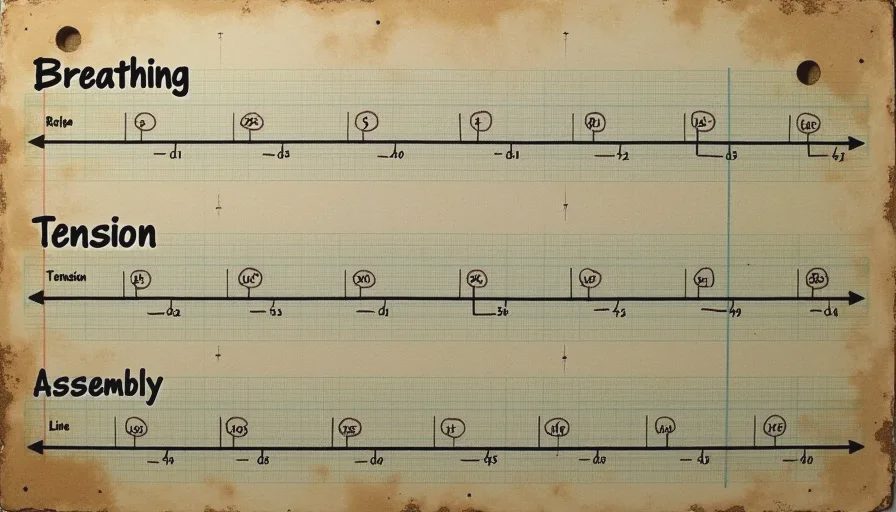
In my editorial work, I tend to sort checkpoint philosophy into three broad pacing models, each of which carries a distinct relationship with the player's time:
The Breathing Model — Checkpoints arrive after moments of genuine narrative or mechanical weight. The game trusts that you want to sit with what just happened. Firewatch and Inside operate here.
The Tension Model — Checkpoints are placed at the crest of difficulty spikes, deliberately withholding relief so that survival feels earned. Dark Souls and Sekiro live in this space, and the friction is the point.
The Assembly Line Model — Checkpoints fire at fixed intervals regardless of what is happening on screen. The game is not pacing an experience; it is managing a pipeline. Many live-service titles default to this without examining the cost.
Pacing Model | Checkpoint Trigger | Player Experience | Risk |
|---|---|---|---|
Breathing | After narrative beats | Reflective, measured | Can feel slow to action-first players |
Tension | At difficulty crests | Earned relief, high engagement | Frustration if difficulty is unfair |
Assembly Line | Fixed time/distance intervals | Predictable, mechanical | Resentment, sense of time being managed |
Each model can succeed. The Assembly Line Model is not inherently disrespectful — a linear shooter with tight encounter design can use it well. What matters is whether the developer chose the model deliberately or fell into it by default. That distinction is the core of editorial game reviews: not whether a game is fun, but whether its structure reflects intention.
When Checkpoint Placement Breaks the Contract
A checkpoint fails when it asks you to replay content that taught you nothing new. That is the single clearest signal that a game has stopped respecting your time — and once you learn to spot it, you cannot unsee it.
The Replay Tax
I want to be specific here, because abstraction is where game pacing analysis loses its usefulness. Consider a scenario I hit last year in a mid-budget action title: a boss fight preceded by a two-minute traversal sequence — climbing, shimmying, a short scripted conversation. The checkpoint sat before the traversal, not before the boss. Every death sent me back through the climbing. After seven attempts, I had the traversal memorized to muscle memory, the dialogue memorized to syllable, and the boss still felt random in its third phase.
That is a replay tax. The game is billing you for content you already paid attention to. In a newsroom, we would have called this padding. In game design, it is a structural failure that no amount of visual polish can cover.
The traversal teaches nothing about the boss mechanics.
The dialogue does not deepen on repeat — it is identical every time.
The checkpoint location implies the developer did not playtest the death loop, or did not care.
The Severity Spectrum
Not every checkpoint error carries the same weight. I find it useful to separate honest mistakes from systemic indifference:
Severity | Description | Example Pattern |
|---|---|---|
Minor | Occasional misplaced checkpoint in an otherwise tight game | One boss in ten sends you back thirty seconds |
Moderate | Repeated replay of non-instructive content across a chapter | Traversal + mini-fight + boss, checkpoint at the start |
Severe | Systemic disregard for player time as a design posture | Entire game structured around repetition as difficulty |
The severe tier is where I start writing differently. A game can have gorgeous art direction, a moving score, and sharp combat fundamentals, and still be structurally hostile to the person holding the controller. Craftsmanship is not the same as genuine artistic force. One can be impeccable in isolation and still fail the person it was made for. That gap — between surface quality and structural generosity — is what game pacing analysis exists to name.

The Honest Question: What Does This Game Want?
When I sit down to write a review, I keep a notebook beside me with four prompts written in ink: What does this game want? What does it refuse? What does it waste? What remains? Checkpoint design answers at least two of those before I touch the combat or the story. What a game wants is written in its pacing. What it wastes is written in its repetition. A game that places its checkpoints with care is telling you it considered your evening. A game that doesn't is telling you something too — and you should listen.





No feedback yet — submit the first.