
Late nights in Madison have a rhythm. After a walk with a film-score podcast in my ears, I sit down at the desk to draft notes on whatever new release I’ve been living with. Old strategy guides stacked on one side, a notebook open to the four prompts I always start with, phone and earbuds waiting to charge. For a long time the lighting was one of the quiet reasons those nights ended early. A lamp that tipped when I reached for a pen. Light that forced me to stop and adjust every twenty minutes. An outlet already full of adapters. I’ve started noticing how much of a writing night is lost to tiny interruptions like these. So I ordered this dimmable desk lamp with USB charging for $19.99. It has stayed on the desk ever since.
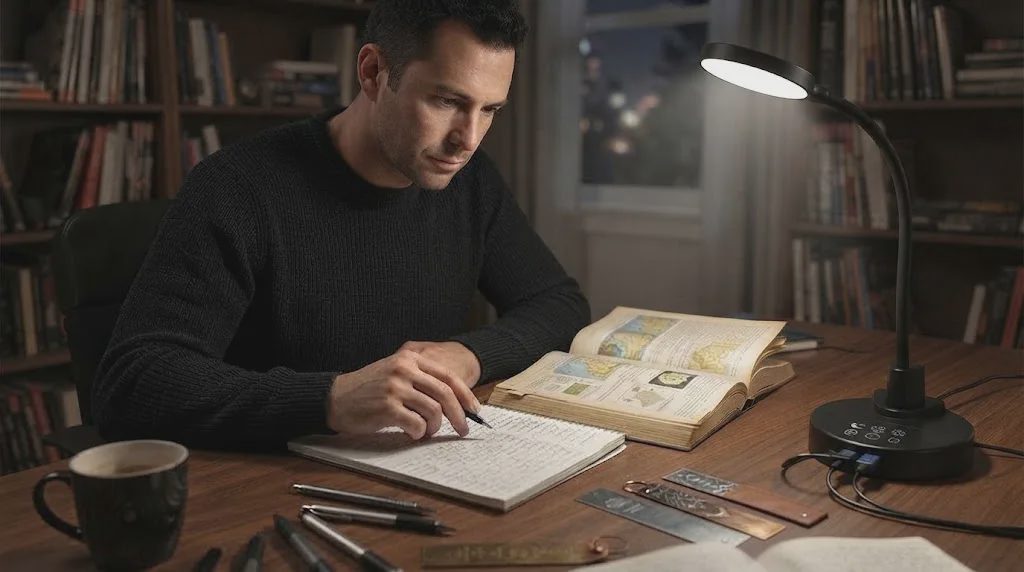
The lamp arrived compact, gooseneck already attached, included adapter in the box. Setup took under a minute. Plug in only the supplied adapter—the ports are output-only and will not power the lamp—press the button, and the desk is lit.
🛒 Check Price & Reviews on Amazon
What the Desk Was Actually Asking For
I spend long stretches reading physical strategy guides, marking pages, and writing under artificial light. Previous lamps either produced a low-level flicker after an hour or forced a choice between light that was too bright for late work and light too dim to see fine print. I also wanted something that could charge the phone and earbuds without adding another wall wart to the crowded outlet strip.
What I was really testing was whether a small desk tool could reduce the interruptions that keep cutting sessions short. A lamp that tips. A light that demands constant adjustment. An outlet that is already full. Those are the kinds of frictions that make a night feel shorter than the clock says it was.
How the Light Settles into the Work
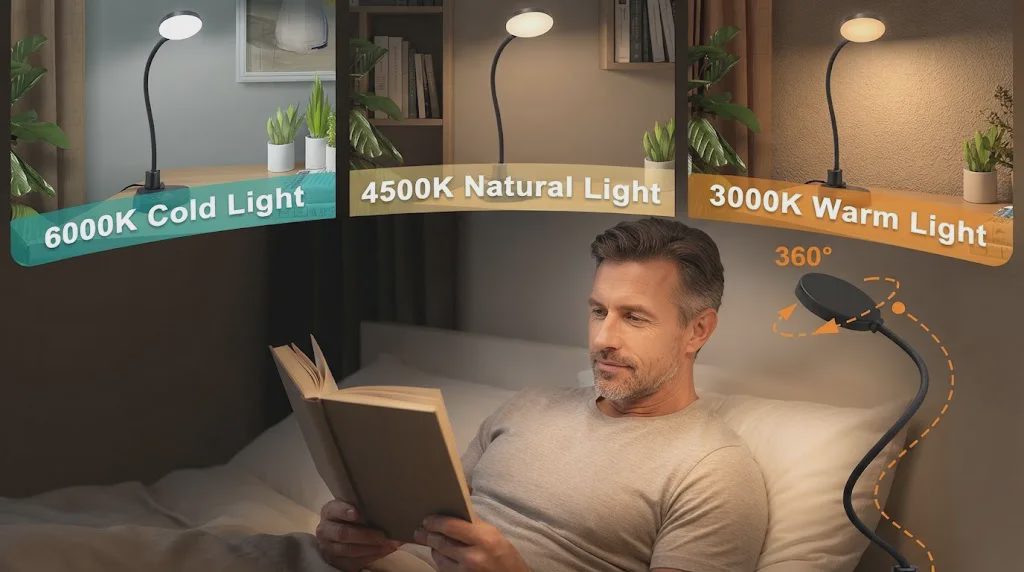
The first evening I set the light to a natural white at mid-level and angled the gooseneck so the head sat about twelve inches above the open notebook. After two hours of reading and note-taking I noticed I had not stopped early because of the light itself. That is the only test that matters for my use: whether the lighting becomes one more reason to quit or simply stays out of the way.
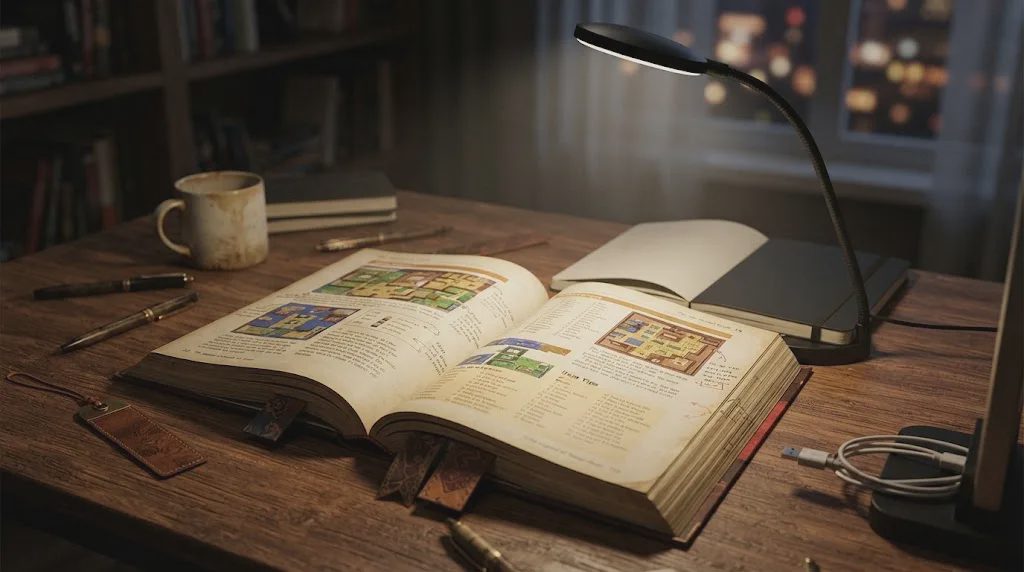
The gooseneck is the part I reach for most. It bends smoothly and holds the position once set. I can drop the head low for close work on a map or lift it higher when I need broader coverage of the desk. Because it is flexible rather than rigid-jointed, there is no sudden snap when I adjust it mid-sentence. I can reposition it without breaking the thought I was in the middle of writing. That small change removes one of the micro-interruptions that used to accumulate across an evening.
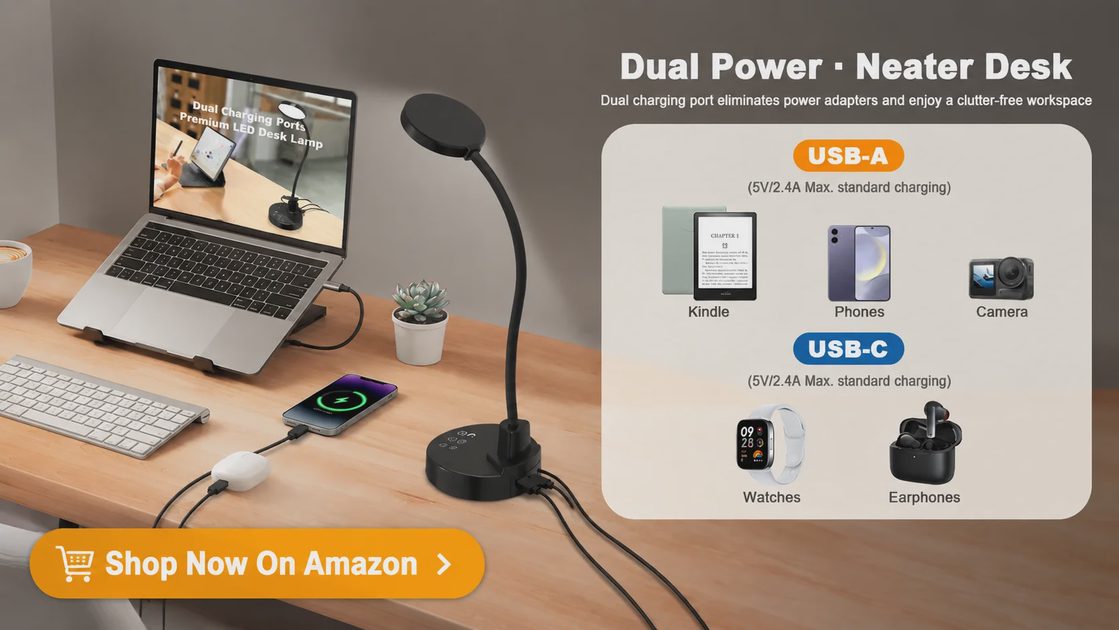
The dual USB ports sit on the base. I keep the phone on one and a pair of earbuds on the other. Both charge at a shared low rate—not fast charging, as the listing makes clear—but enough to top them up while I work. The ports do not power the lamp; you must use the included adapter. That limit is simple once you accept it.
Timers matter more than I expected. I often set the 60- or 90-minute auto-off when I start a late session. If I drift into a long guide entry and lose track of time, the lamp simply goes dark instead of staying on until morning. There is also a one-tap night mode that drops to the lowest brightness—useful when I want just enough glow to find the notebook without fully waking the room.
🛒 Check Price & Reviews on Amazon
The Friction That Remains
A few things become clear after repeated use. The power button sits low on the base; in a dark room you may need a second to locate it by touch. The base is weighted and has a non-slip pad, so the lamp stays put under normal adjustment. If you force the gooseneck into an extreme forward lean while the head is fully extended, the center of gravity can shift enough that a light bump will tip it. I learned to keep the curve more upright when the head is high. The construction is solid for everyday desk use but not heavy-duty; treat it as a tool that lives on the surface rather than something that will survive being knocked off daily.
The memory function is convenient: the lamp returns to the last color and brightness after you power it off and on again. That removes one small decision every time I sit down.
What actually settles into the work looks like this:
A natural or slightly cool light for drafting and map work, warmer when the evening stretches late
Mid brightness for most writing, lowest for the quiet end of a session
A timer set for 60–90 minutes so the light does not outlast the work
Ports that keep two small devices charged without extra cable clutter
A gooseneck I can move without standing up or breaking a sentence

What Stays and What Does Not
After several weeks the features that remain useful are the ones that remove interruption rather than the ones that sound impressive on a listing. The ability to aim the light without standing up. The timer that turns itself off. The ports that keep two small devices charged without another cable run. The light that does not force me to stop and rethink the setup every half hour.
What it refuses is also clear. It will not fast-charge a modern phone. It will not replace a heavier, more rigid arm for large drafting work. It will not stay stable if you push the head too far forward and then lean on the desk. Those limits are not hidden; they simply become part of how you use it.
I have now used the lamp across full review drafts, late reading sessions, and quiet evenings sorting old magazines. The output is consistent across the three color temperatures for my use; none of them introduce the odd cast some cheaper LEDs show. The desk lamp with timer function has become automatic—I set it and stop thinking about whether I left a light on. What remains after the novelty fades is simply that I no longer end sessions early because of the light itself.
Which Nights It Belongs To
This setup suits the kind of evening I actually have: long stretches of reading strategy guides, drafting notes, and charging the small devices that travel with me from the walk back to the desk. It fits a surface that is already crowded with books and notebooks. It fits nights when the work is quiet and continuous, and the last thing I want is another small reason to stop.
It is less useful on nights that require the lamp to travel, or when the work involves large sheets that demand a heavier, more rigid arm. In those cases the small base and lightweight construction become limitations rather than advantages.
What Remains After the Light Settles
Most desk tools earn their place by solving one problem and then becoming invisible. This dimmable desk lamp with USB charging did that for the specific interruptions that used to cut my writing nights short. The flexible gooseneck lets me aim without standing up. The timer ends the light when the session should end. The ports keep two small devices charged without extra clutter. The light itself stays even enough that I stop noticing it.
It does not pretend to be more. After several weeks the thing that remains is simply that the desk no longer asks me to stop working because of the light. That is the only judgment that matters on a night when the notebook is open and the next release is still waiting to be understood.



No feedback yet — submit the first.