
For ten years I sat behind a reviews desk — first as a staff editor at a regional outlet, then as reviews editor at a national games publication. Editorial game reviews, I learned, are less an oracle than an assembly line with a thesaurus, and the line between earned authority and manufactured confidence is thinner than most readers realize. Under deadline the questions that matter most—what the game wants, what it wastes, what actually remains—get sanded down until the piece sounds certain even when the critic isn’t. I want to lay out what that pipeline actually does to a piece of writing, on this small games criticism blog, for anyone who reads or writes about games and wonders where the certainty comes from.
How a Reviews Desk Actually Works
Most published reviews pass through a pipeline that quietly shapes tone before a reader ever sees it, and that pipeline is where false authority gets manufactured.
When I was a staff editor, my job was not to have opinions. It was to make other people's opinions sound consistent, publishable, and defensible. A writer would file twelve hundred words on a role-playing game; I would cut it to nine hundred for the slot, sharpen the verdict, smooth the voice, and make sure nothing contradicted the house stance. Editorial game reviews, in that environment, are collaborative products that read like solo declarations. The byline belongs to one person, but the confidence belongs to the desk.
The Invisible Hand on the Sentence
Several forces compress and standardize a review before publication, and each one nudges the text toward a certainty it may not have earned:
Word counts forced compression, and compression favored verdict over reasoning.
House style flattened idiosyncratic voices into a recognizable brand register.
Embargoes synchronized publication, which made independent takes look like consensus.
Subheads were templated, so arguments bent toward expected shapes.
A games criticism blog run by one person can dodge some of this. But even solo writers internalize the muscle memory of the desk, which is why so much independent writing still sounds like it came off an assembly line.

The Tells of Manufactured Confidence
After editing hundreds of pieces, I learned to spot the phrases that signal borrowed authority rather than earned understanding, and they cluster around three things writers reach for when they cannot articulate why a game matters: difficulty, length, and budget.
Phrases That Should Make You Suspicious
Tell | What it hides |
|---|---|
"It demands your attention" | Unclear what the pacing actually does |
"A generous amount of content" | No judgment on whether the content is worth doing |
"Technically impressive" | Avoids commenting on art direction or intent |
"For fans of the genre" | Sidesteps whether genre conventions are used well |
"Ambitious scope" | Measures effort, not accomplishment |
When editorial game reviews lean on these, they describe the surface of the work, not its structure. A thoughtful games criticism blog should name the craft, not the spec sheet. Not every good game is worth your time — and not every long, hard, expensive one is important. Difficulty is a design choice, not a virtue; length is a budget decision, not a measure of depth; and a large team is a logistical fact, not an artistic one.
What I Actually Look For Now
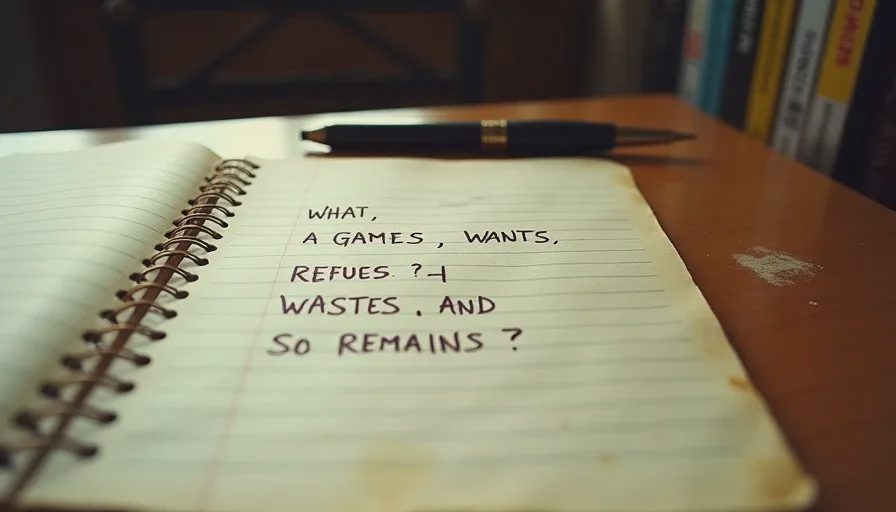
The four prompts I keep on my notebook — What does this game want? What does it refuse? What does it waste? What remains? — are not clever. They are defensive. They keep me from mistaking polish for purpose, and they are the reason I can still write editorial game reviews without pretending to certainty I do not have. Late at night, after a walk through my Madison neighborhood listening to a film score or a games podcast, I sit down with the notebook before I touch the keyboard, and those four questions decide whether a piece is worth filing at all.
A Simple Reading Practice
These prompts work for players as much as for anyone running a games criticism blog, and they cost nothing to apply:
Ask what the game is structurally committed to, not what its marketing claims.
Notice what it refuses to include — absences reveal design priorities.
Track what it wastes: systems, characters, and mechanics left underdeveloped.
Sit with what remains a week later; that residue is closer to a real verdict than a launch-window score.
That practice is free, and it has outlasted every scoring system I ever administered on the desk. Editorial game reviews are not prophecies. They are arguments, and good ones stay honest about their limits — about what they noticed and what they missed, about which judgments are settled and which are still soft. The authority worth trusting is the kind that admits it was assembled in a hurry, under embargo, on a Tuesday, by someone who genuinely wanted to get the game right.





No feedback yet — submit the first.